

A320 Runway Overrun Prevention System (ROPS)


Introduction
The Runway Overrun Prevention System (ROPS) installed on the Airbus A320 family is designed to reduce the risk of runway overruns during landing and rejected takeoff. ROPS is a safety function that monitors the aircraft stopping capability in real time by comparing aircraft kinetic energy with the available runway distance. When the system detects that the aircraft may not be able to stop within the remaining runway, it provides a warning to the flight crew and, if required, automatically applies maximum braking. ROPS is not intended to replace normal performance calculations or operational procedures and is considered a last-resort safety protection.
System Architecture and Data Sources
ROPS is not implemented as a standalone system. It is a function distributed across several existing aircraft systems. The Flight Management and Guidance Computers provide runway data, including runway length and aircraft mass, as well as configuration and environmental information. The Air Data and Inertial Reference System supplies ground speed and longitudinal deceleration data. Braking commands are executed through the Brake and Steering Control Unit, which manages normal braking, anti-skid, and autobrake logic. Crew alerts are generated via the Flight Warning System.
The system continuously computes stopping capability using real-time aircraft performance rather than relying solely on pre-computed landing or takeoff distances. This allows ROPS to react to deviations from expected deceleration, such as delayed braking, reduced braking efficiency, or unfavorable runway conditions.
ROPS Operational Phases
ROPS operates in two flight phases: landing and takeoff. In the landing phase, the system becomes active at approximately 50 ft radio altitude and remains active throughout the landing rollout until taxi speed is reached. In the takeoff phase, ROPS monitors the aircraft during the takeoff roll and is relevant in the event of a rejected takeoff, particularly at high speed.
The logic and thresholds used by ROPS are automatically adapted to the applicable flight phase.
Landing Phase – Monitoring Logic
During landing, ROPS continuously evaluates whether the aircraft can stop within the remaining runway using the current measured deceleration. The computation takes into account aircraft ground speed, longitudinal deceleration, aircraft mass, braking efficiency, runway length remaining, wind component, and runway slope. The system compares the predicted stopping distance, based on actual aircraft performance, with the remaining runway distance.
This real-time monitoring allows the system to detect situations where the aircraft is not decelerating as expected, even if landing performance calculations were nominal.
Runway Overrun Warning (ROW)
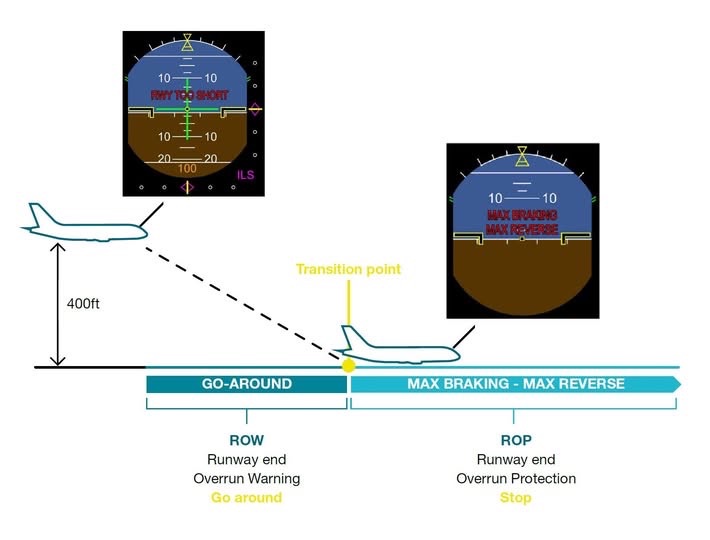
If ROPS determines that, with the current deceleration, the aircraft may not stop before the end of the runway, it triggers a Runway Overrun Warning. The warning is provided as an aural alert stating “RUNWAY OVERRUN” and is accompanied by associated visual indications through the Flight Warning System.
At this stage, ROPS does not command any braking action. The warning is intended to prompt the flight crew to take immediate corrective action, such as increasing braking effort or ensuring prompt thrust reverser deployment. Pilot authority remains unchanged during the warning phase.
Runway Overrun Protection (ROP)
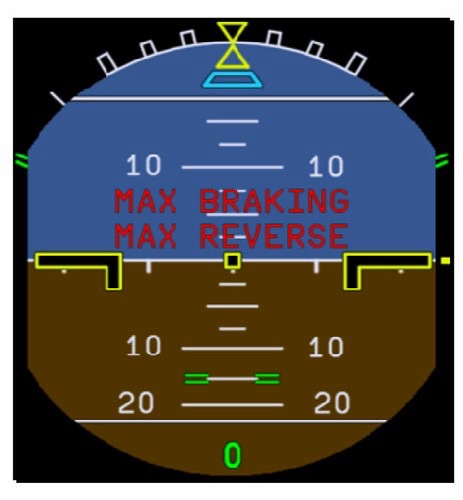
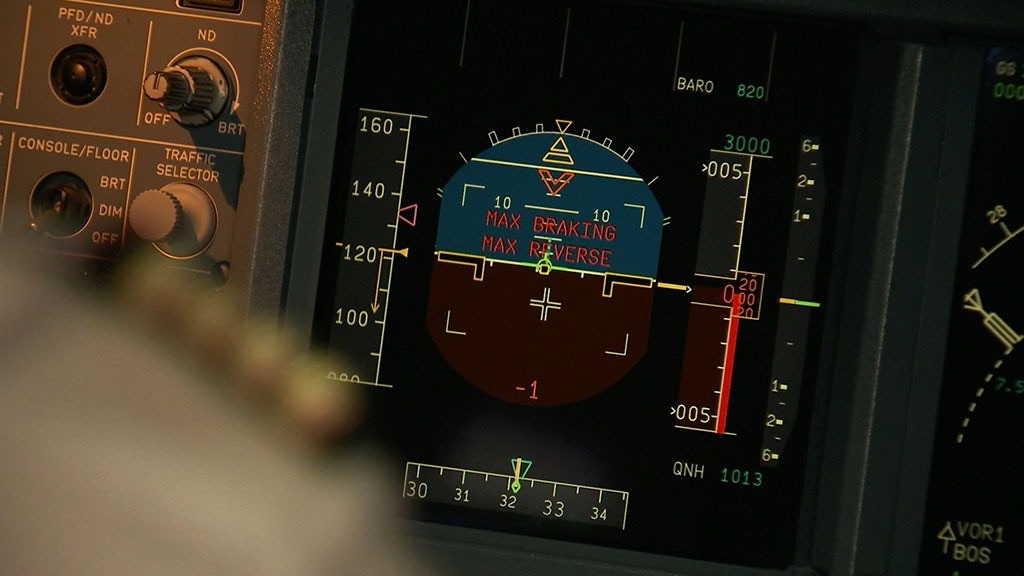
If the risk of runway overrun persists or increases after the warning, ROPS escalates to Runway Overrun Protection. In this mode, the system automatically commands maximum braking via the Brake and Steering Control Unit. This command overrides the selected autobrake setting and supplements pilot brake input if required.
Maximum braking is applied using normal braking with anti-skid protection to achieve optimal deceleration while maintaining directional control. ROPS will never reduce braking commanded by the pilot. Thrust reverser deployment remains a crew action and is not automated by the system.
Runway Overrun Protection represents the highest level of ROPS intervention and is intended to maximize stopping performance within the remaining runway distance.
Takeoff Phase – Rejected Takeoff Protection
During takeoff, ROPS provides protection in the event of a rejected takeoff close to runway performance limits. When a reject is initiated, the system evaluates aircraft speed at reject, remaining runway distance, aircraft mass, and braking capability.
If the stopping margin is assessed to be insufficient, a Runway Overrun Warning is generated to alert the flight crew. If necessary, Runway Overrun Protection commands maximum braking to support the rejected takeoff. This function operates in coordination with normal rejected takeoff braking logic, including ground spoiler deployment and anti-skid control.
As in the landing phase, thrust reverser operation remains under pilot control.
Use of Flight Management System Data
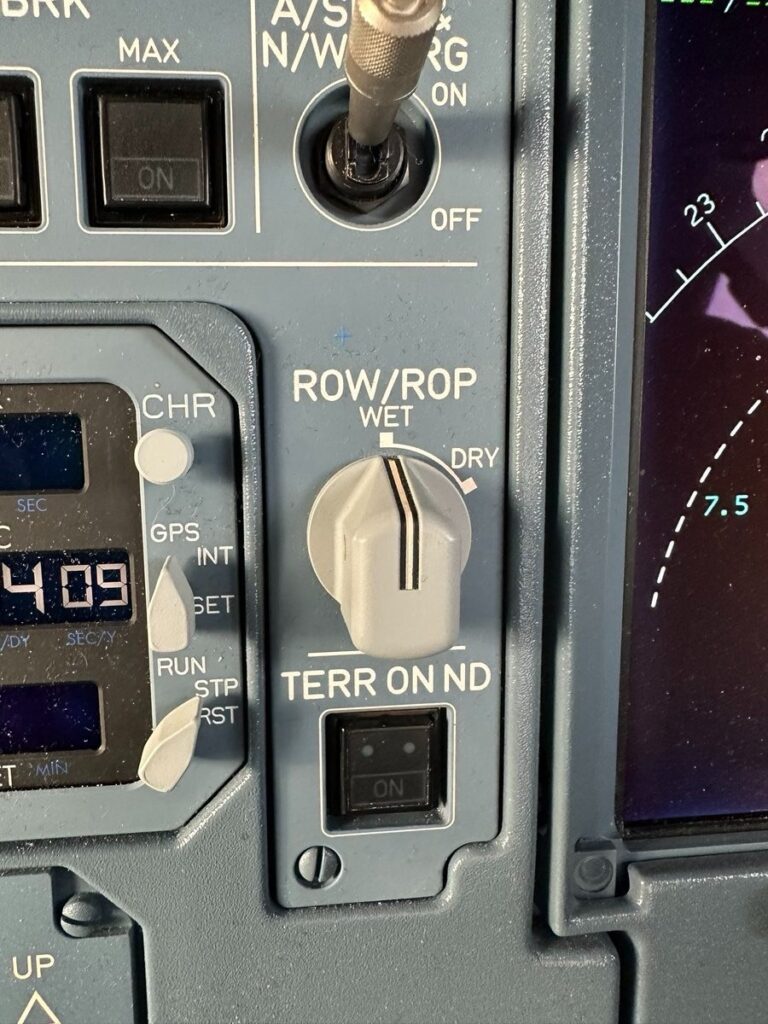
ROPS relies on data provided by the Flight Management System, including runway length and aircraft mass. The accuracy of this data directly affects the system’s assessment of stopping capability. Incorrect runway selection or gross weight entries may degrade ROPS performance.
For this reason, Airbus considers ROPS a safety enhancement rather than a primary means of ensuring runway stopping performance. Correct performance planning and adherence to operational procedures remain essential.
Operational Philosophy
ROPS is designed in accordance with Airbus’ layered safety philosophy. It is intended to provide protection only when normal operational defenses have been eroded. Activation of ROPS typically indicates that conditions such as delayed braking, long flare, or late rejected takeoff have resulted in a critical reduction in stopping margin.
The system is designed to support the crew without encouraging reliance on automation for normal operations.
Limitations and Crew Awareness
ROPS does not replace landing or takeoff performance calculations and does not guarantee that a runway overrun will be avoided in all conditions. The system does not account for abnormal runway surface conditions beyond those assumed in the braking model and does not compensate for incorrect Flight Management System entries. ROPS does not provide lateral guidance, does not deploy thrust reversers, and does not steer the aircraft. It is intended as a last-line protection only and should not be used as an operational planning tool.
Conclusion
The Airbus A320 Runway Overrun Prevention System provides continuous monitoring of aircraft stopping capability during landing and rejected takeoff. By combining real-time performance data with automated braking protection, ROPS enhances runway safety through timely warnings and, when necessary, automatic application of maximum braking. While highly effective as a safety net, ROPS does not replace sound airmanship, accurate performance planning, or correct pilot technique.
For all aviation-related guidance (DGCA ground classes, pilot training, cabin crew training)
Contact us https://contrail.in/
phone numbers +91 78457 69399